Instagram API Follower Count in 2026: Official Graph API Guide

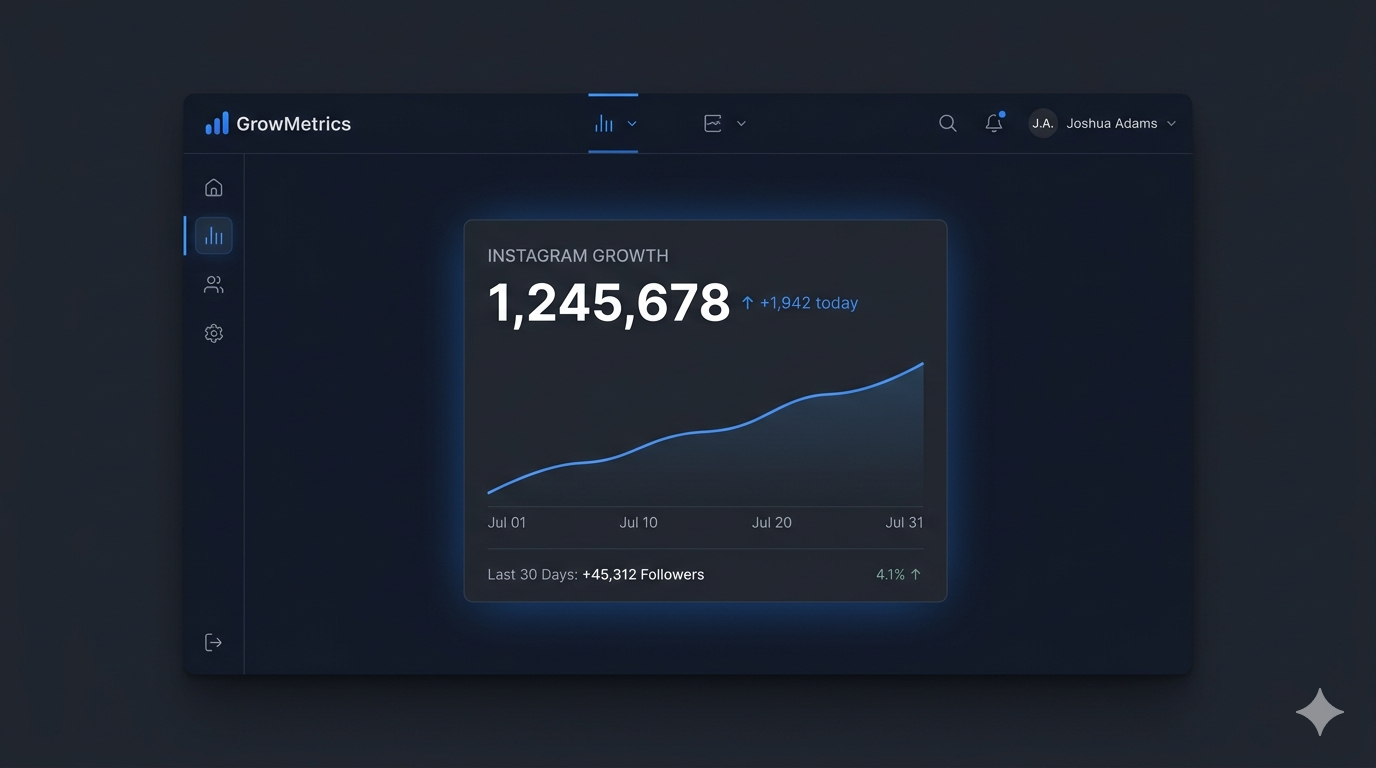
Follower count remains one of the most requested metrics in the Instagram API ecosystem.what the Instagram API actually includes
Whether you are building:
influencer analytics tools
creator monitoring dashboards
social listening platforms
competitor tracking systems
marketing reporting pipelines
you eventually need a reliable way to fetch Instagram follower counts programmatically.
In 2026, Instagram data access is stricter than ever.
The legacy Instagram Basic Display API is effectively obsolete for analytics use cases, and the official Instagram Graph API is now the only supported route for structured follower metrics.
However, most developers quickly discover three major problems:
OAuth complexity
strict API rate limits
poor scalability for large influencer datasets
This guide explains:
how to fetch Instagram follower counts using the official Graph API
how Business Discovery actually works
production-ready Python examples
API limitations you cannot bypass
why many SaaS platforms move to unified social APIs like KeyAPI.ai for real-time data infrastructure
What Is the Instagram Followers Count API?
Instagram does not provide a dedicated “followers endpoint.”
Instead, follower count is exposed as a field inside the Instagram Graph API.
The metric appears as:
followers_countThis value returns the current follower total for an Instagram Business or Creator account.
There are two completely different ways to retrieve it:
Use Case | API Method |
|---|---|
Your own authenticated Instagram account | User Profile Endpoint |
Another public business account | Business Discovery Endpoint |
This distinction is extremely important because many developers incorrectly assume they can query any username directly.
You cannot.
Instagram requires authenticated Business access for almost all analytics operations.
Method 1: Get Your Own Instagram Follower Count
If your application is authenticated with the target Instagram account, you can fetch the follower count directly from the profile endpoint.
Official Endpoint
GET https://graph.facebook.com/v22.0/{ig-user-id}
    ?fields=id,username,followers_count
    &access_token={access-token}
Required Permission
instagram_basicExample Response
{
  "id": "17841400000000000",
  "username": "yourbrand",
  "followers_count": 152340
}
Python Example: Fetch Your Own Follower Count
import requests

def get_my_followers(ig_user_id, access_token):
    url = f"https://graph.facebook.com/v22.0/{ig_user_id}"

    params = {
        "fields": "id,username,followers_count",
        "access_token": access_token
    }

    response = requests.get(url, params=params)

    data = response.json()

    return data

result = get_my_followers(
    "17841400000000000",
    "YOUR_ACCESS_TOKEN"
)

print(result)
Method 2: Get Another Account’s Follower Count
This is where most developers struggle.
Instagram does not allow unrestricted public username lookups through the official API.look up Instagram usernames and public profile availability
Instead, you must use the Business Discovery API.
Business Discovery allows one authenticated Instagram Business account to query public data from another Business or Creator account.
This is the official method used by:
influencer analytics tools
creator CRM systems
social intelligence platforms
campaign tracking software
Official Business Discovery Endpoint
GET https://graph.facebook.com/v22.0/{your-ig-user-id}
    ?fields=business_discovery.username(targetuser){followers_count,username}
    &access_token={access-token}
Required Permissions
Most applications need:
instagram_basic
pages_show_list
pages_read_engagement
If the app is public, Meta App Review is also required.
Python Example: Get Competitor Follower Count
import requests

def get_competitor_followers(
    your_ig_id,
    target_username,
    access_token
):
    url = f"https://graph.facebook.com/v22.0/{your_ig_id}"

    params = {
        "fields": f"business_discovery.username({target_username}){{followers_count,username}}",
        "access_token": access_token
    }

    response = requests.get(url, params=params)

    data = response.json()

    if "error" in data:
        return data["error"]

    return data["business_discovery"]

result = get_competitor_followers(
    "17841400000000000",
    "nike",
    "YOUR_ACCESS_TOKEN"
)

print(result)
Why Most Developers Hit Problems Quickly
The official Graph API works well for small projects.
But once you scale into analytics infrastructure, the bottlenecks become severe.
1. Strict Rate Limits
Meta heavily throttles Instagram API usage.
The most common limitation developers hit is:
200 calls per hour per connected Instagram accountThis becomes a major problem if you monitor:
thousands of influencers
creator marketplaces
competitor dashboards
campaign reporting systems
Once limits are exceeded, the API returns:
HTTP 429 Too Many Requests2. OAuth Complexity
To use the official API you must manage:
Meta Developer Apps
Facebook Pages
Instagram Business accounts
OAuth authorization flows
long-lived access tokens
token refresh logic
App Review compliance
For SaaS products, this creates substantial maintenance overhead.
3. Cached Data Problems
Because of rate limits, many teams cache follower counts.
This introduces accuracy issues.
For example:
viral spikes become delayed
influencer growth appears outdated
campaign reports lose precision
live dashboards become unreliable
If your platform depends on real-time creator metrics, aggressive caching becomes a serious limitation.
The Alternative: Unified Social APIs
As social data infrastructure becomes more fragmented, many analytics companies move toward unified APIs.
Instead of integrating each platform separately, they centralize data access through one provider.
This is where platforms like KeyAPI.ai become useful.
What Is KeyAPI.ai?
KeyAPI.ai provides a unified social media API layer across multiple platforms including:
Instagram
TikTok
YouTube
X (Twitter)
Facebook
LinkedIn
What the API Does NOT Expose
why the Graph API does not expose follower lists
Instead of handling:
Meta OAuth
TikTok authentication
platform-specific schemas
rate-limit management
developers receive standardized JSON responses through one infrastructure layer.
Why Developers Use Unified APIs
The biggest advantages are:
Problem | Official APIs | Unified API Layer |
|---|---|---|
OAuth setup | Complex | Simplified |
Multiple platforms | Separate integrations | One API structure |
Rate-limit management | Manual | Centralized |
Schema normalization | Different everywhere | Standardized |
Real-time scaling | Difficult | Easier |
Engineering maintenance | High | Lower |
Python Example: Fetch Instagram Followers via KeyAPI.ai
Instead of Business Discovery logic, you simply pass the username.
import requests

def get_realtime_followers(username):

    url = f"https://api.keyapi.ai/v1/instagram/profile?username={username}"

    headers = {
        "Authorization": "Bearer YOUR_KEYAPI_SECRET"
    }

    response = requests.get(url, headers=headers)

    data = response.json()

    return data.get("followers_count")

result = get_realtime_followers("nike")

print(result)
When Unified APIs Make Sense
Unified social APIs are especially useful if you are building:
influencer tracking tools
creator CRM platforms
social listening dashboards
growth intelligence systems
multi-platform analytics products
marketing automation platforms
They reduce infrastructure overhead significantly compared to managing individual APIs manually.
What Instagram APIs Cannot Do
Many developers assume Instagram APIs expose more data than they actually do.
There are important restrictions you cannot bypass legitimately.
1. You Cannot Fetch Follower Lists
Instagram does NOT expose:
follower usernames
follower IDs
follower exports
audience scraping
Any service claiming to provide this through “official APIs” is misleading.
Most rely on unstable scraping systems that violate Meta Terms of Service.
2. Private Accounts Are Restricted
If an Instagram account is private:
follower counts may become inaccessible
Business Discovery may fail
public analytics become limited
This restriction applies regardless of the tool you use.
3. Personal Accounts Are Limited
Business Discovery only supports:
Business accounts
Creator accounts
Regular personal Instagram accounts have far fewer accessible metrics.
Best Practices for Instagram API Development
If you are building production-grade systems, follow these practices.
Store Historical Snapshots
Instagram only returns current values.
If you want historical growth charts:
store snapshots daily
maintain your own time-series database
build trend calculations internally
Instagram does not provide historical follower history.
Implement Retry Logic
Always expect:
temporary API failures
rate-limit responses
token expiration
intermittent Graph API issues
Production systems should include:
exponential backoff
retry queues
monitoring alerts
Normalize Platform Schemas
If you support multiple social networks:
standardize field names
normalize timestamps
unify engagement metrics
This simplifies reporting dramatically.
Frequently Asked Questions
Does Instagram provide real-time follower counts?
The Graph API returns the follower count available at request time, but your request frequency is limited by rate throttling.
For high-frequency querying, many companies use centralized social API infrastructure.
Can I track competitor follower growth historically?
Not directly.
Instagram only returns current snapshots.
To build historical trend reports, you must continuously store follower counts yourself.
Can I fetch follower counts without login?
Officially, no.
Instagram requires authenticated Business access.
Some unified APIs simplify this workflow through centralized infrastructure.
Is scraping Instagram allowed?
Automated scraping typically violates Instagram Terms of Service and may result in blocking, legal risk, or unstable infrastructure.
Official APIs remain the safest long-term option.
Final Thoughts
Instagram follower count data remains one of the core building blocks for social analytics products in 2026.official APIs vs unified social media API
The official Instagram Graph API is reliable for compliant applications, but scaling large analytics systems introduces serious operational challenges:
OAuth maintenance
rate limits
token refresh cycles
infrastructure complexity
data freshness problems
For small projects, the official API is usually sufficient.
For large-scale creator intelligence platforms, unified API architectures are increasingly becoming the standard approach.
The key is choosing an infrastructure model that matches your product scale, engineering resources, and real-time data requirements.