The YouTube Analytics API Documentation Reality Check in 2026

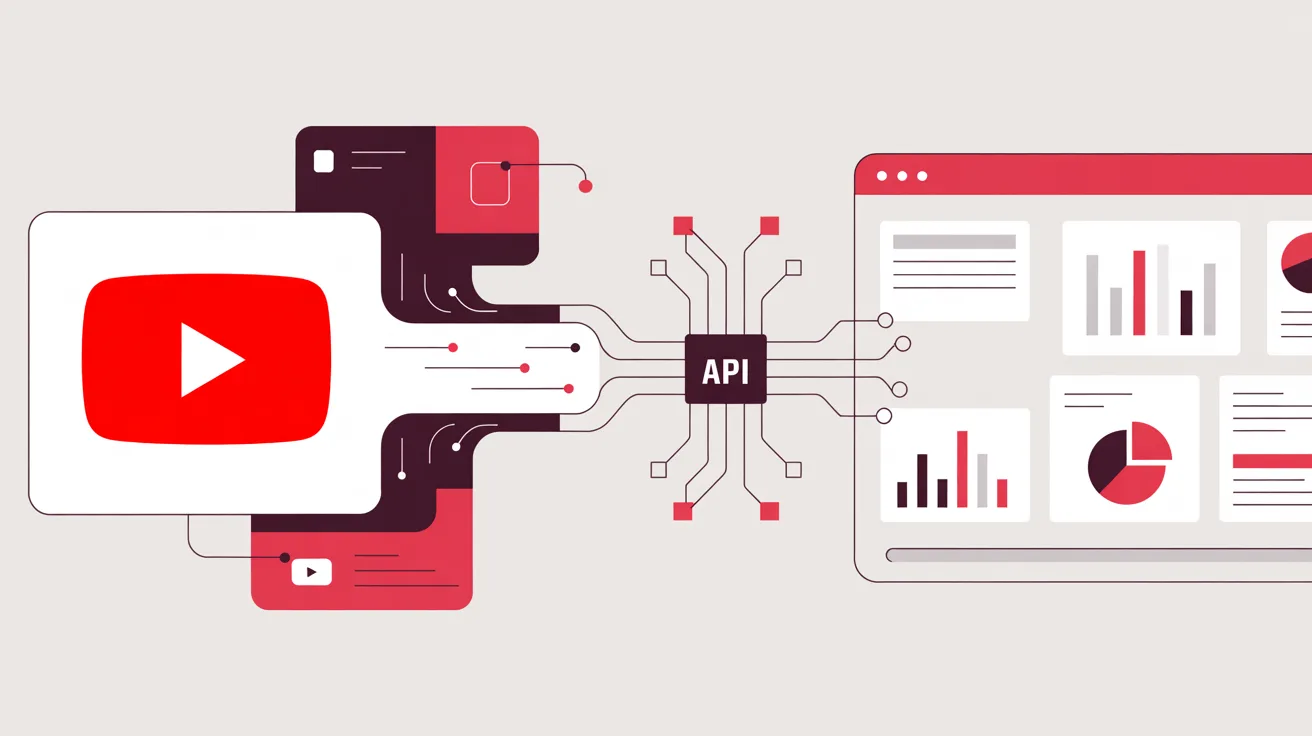
When your team is shipping a multi-tenant creator operating system, an AI-powered content optimization engine, or a competitive intelligence platform for brands, the YouTube Analytics API documentation stops being a reference and becomes a strategic constraint document that shapes your entire architecture.
After leading integrations for several SaaS products handling thousands of channels and millions of daily video views, I can tell you this: the official documentation outlines capabilities that feel incredibly powerful on paper. But in production, especially in the 2025–2026 creator economy boom, the gaps, quota realities, and engineering overhead separate products that ship velocity from those stuck in maintenance mode.
Audience expectations have shifted dramatically. Creators and brands now demand not just surface-level views and likes, but granular retention curves segmented by traffic source, demographic deep-dives, predictive signals, and cross-platform normalized metrics. The YouTube Analytics API delivers much of this—but only if you navigate its complexities intelligently.
We built KeyAPI precisely because teams like yours were burning weeks on auth flows, quota optimization theater, and data normalization instead of building differentiated features.
Understanding the Core Power: Metrics and Dimensions That Actually Move the Needle
The YouTube Analytics API focuses on performance data unavailable through public endpoints. Core metrics include estimatedMinutesWatched, views, averageViewDuration, averageViewPercentage, subscribersGained, and likes. Newer additions and evolutions in 2026 emphasize contextual engagement, relevance-adjusted watch time, and predictive performance projections.
Dimensions allow slicing by video, playlist, country, deviceType, trafficSource, ageGroup (now including refined under-18 estimates), gender, and more. This combinatorial power enables dynamic reporting that powers everything from per-video A/B testing engines to global trend forecasting models.
What the documentation implies—but rarely spells out—is the cost scaling. Adding more metrics and dimensions to a single query increases quota consumption, sometimes dramatically. In practice, teams learn to be surgical: query broad channel-level aggregates daily, then drill into video-specific retention only for high-priority content.
For SaaS builders serving thousands of creators, this selective querying becomes a core competency. Over-querying leads to quota exhaustion and throttled user experiences. Smart teams design tiered data access—basic metrics always available via lighter video data API paths, premium audience insights pulled on-demand through optimized Analytics calls.
Quota Warfare: The Hidden Tax on Innovation
YouTube’s default 10,000-unit daily quota per project remains a defining constraint in 2026. While some calls are cheap, complex Analytics reports with multiple dimensions and high-cardinality filters burn through allocation rapidly.
Real-world example from a recent project: A dashboard serving 800 creator accounts needed daily video performance syncs. Naïve implementation exhausted quotas by mid-morning. The fix involved heavy caching (ETags + Redis with intelligent invalidation), incremental delta pulls based on last-modified signals, aggressive field selection, and fallback to aggregated Reporting API jobs for bulk historical data.
The YouTube Reporting API (often overlooked in initial reviews of the Analytics documentation) becomes critical at scale. It allows scheduling bulk daily/weekly reports that you download asynchronously as CSVs or JSON, dramatically reducing real-time query load. Many mature systems run hybrid architectures: Reporting API for cold storage and warehousing, Analytics API for hot, user-facing queries.
In 2026, with AI agents continuously monitoring channels and suggesting optimizations, quota discipline determines whether your product feels snappy or constantly rate-limited.
YouTube API solutions that abstract these layers let engineering teams stop playing defense with quotas and start focusing on product velocity.
Architecture Patterns That Survive Production at Scale
High-performing teams in 2026 treat YouTube analytics as part of a larger data mesh rather than isolated API calls.
Multi-Tenant Token Management
OAuth 2.0 for channel-specific data requires secure per-user token storage, refresh handling, and scoped access. In serverless environments (Vercel, AWS Lambda), this means robust secret management and careful concurrency handling to avoid token races.
Data Normalization and Enrichment Layer
YouTube metrics formats evolve. Fields appear, deprecate, or change behavior regionally. A resilient system normalizes incoming data into your internal schema, enriches with external signals (e.g., social mentions, search trends), and stores in a time-series optimized warehouse (ClickHouse, TimescaleDB, or BigQuery).
Caching and Query Optimization
Implement multi-level caching: short TTL for volatile metrics like real-time views, longer for stable audience demographics. Use materialized views for common report combinations.
Event-Driven Reactivity
Instead of polling, design systems that react to significant changes—sharp drops in audience retention, subscriber velocity spikes, or traffic source shifts—triggering workflows or notifications.
These patterns separate hobby integrations from enterprise-grade platforms.
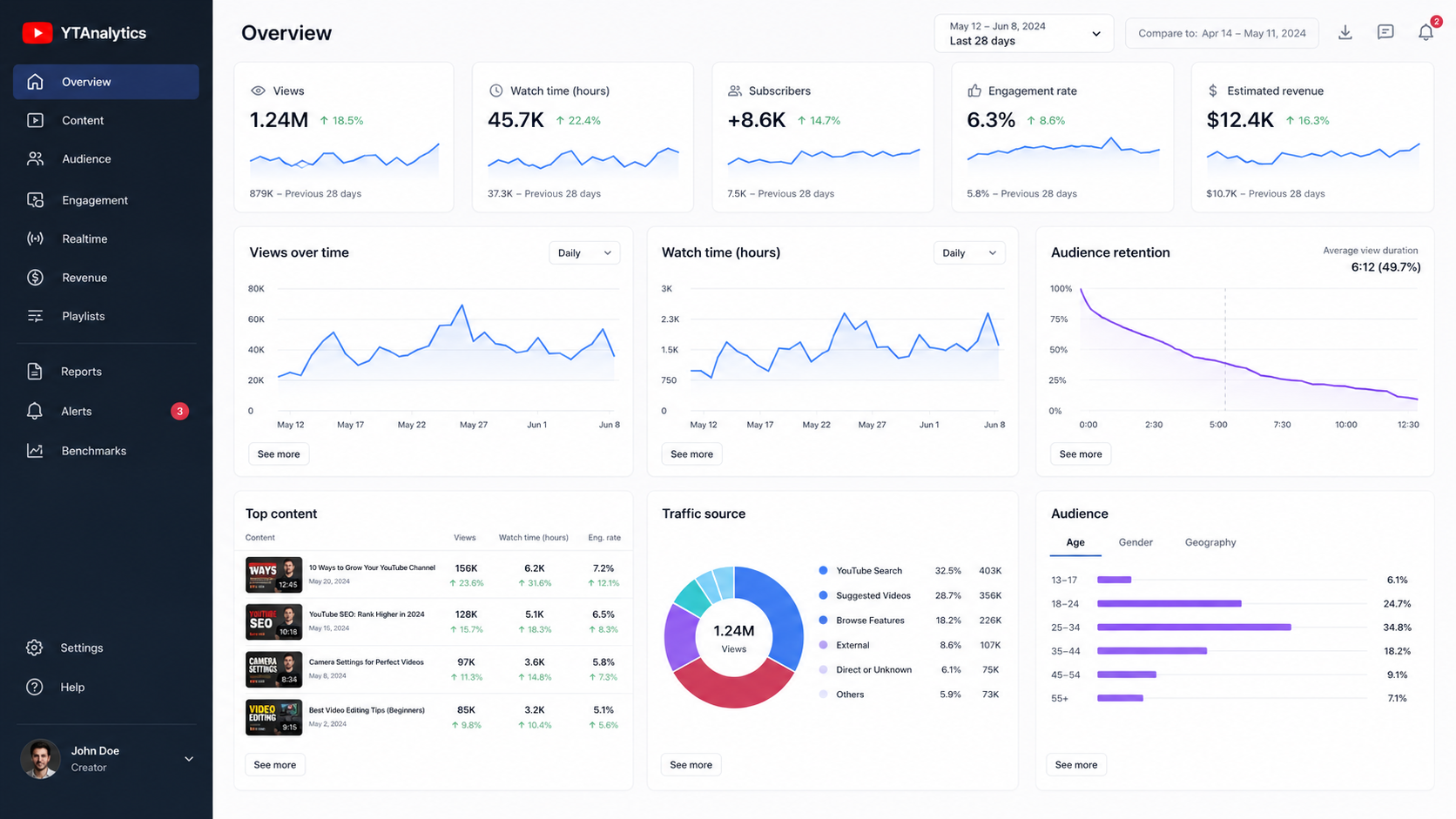
2026 Use Cases: Where YouTube Audience Metrics Create Defensible Moats
Creator Operating Systems
Unified dashboards aggregating YouTube Analytics with other platforms. Normalized watch time, engagement velocity, and audience overlap analysis enable true multi-platform growth recommendations.
AI Content Co-Pilots
Feed retention curves, drop-off heatmaps, and traffic source data into LLMs or custom models. Predict which video concepts will resonate with specific audience segments. Generate thumbnail variants and title suggestions backed by historical performance patterns.
Competitive Intelligence Platforms
For agencies and brands: track competitor channels (where public data allows) or benchmark client performance against category averages. Identify emerging content formats gaining traction through aggregated audience metrics.
Automated Growth Engines
Systems that monitor watch time thresholds and automatically suggest or execute optimizations—recommending upload times, tag adjustments, or end-screen configurations based on real retention data.
Data Engineering and BI Pipelines
Bulk ingestion via Reporting API into lakes/warehouses for advanced analytics, cohort analysis, LTV modeling, and ML feature stores. Teams combine this with ad revenue estimates and external conversion data for full-funnel attribution.
Enterprise Brand Safety and Sponsorship Tools
Deep demographic and contextual engagement data helps brands choose creators whose audiences align perfectly with target personas, moving beyond vanity metrics.
In all these scenarios, the YouTube video analytics API data becomes fuel for differentiation. Teams that access it efficiently win market share.
Challenges the Documentation Won’t Highlight
Data Discrepancies: API numbers sometimes lag or differ slightly from YouTube Studio due to processing delays or privacy thresholding.
Privacy and Compliance: Stricter rules around demographic data, especially age estimates. Teams must implement consent flows and data retention policies carefully.
Regional and Category Variations: Metrics availability and reliability differ by geography and content vertical.
Token Expiry in Long-Running Jobs: Background workers pulling data for hundreds of channels need sophisticated retry + backoff logic.
Cost at True Scale: While default quotas suffice for development, production SaaS often requires quota increase requests—which involve justification, audits, and time.
These realities push many technical founders toward hybrid or abstracted solutions.
Emerging Patterns and Future-Proofing Your Integration
Leading teams in 2026 are:
Combining YouTube retention data with on-platform comment sentiment and external search volume for holistic content scoring.
Building predictive models that forecast video performance within hours of upload using early audience signals.
Creating self-optimizing content systems that A/B test elements automatically based on live analytics feedback loops.
Developing cross-platform attribution models that estimate YouTube’s contribution to overall creator revenue.
The documentation is static. Your architecture must be adaptive.
Developer Experience: Stories from the Trenches
One integration I led for a Series A SaaS took nearly six weeks primarily due to OAuth scoping battles and quota modeling. Another, using a more abstracted approach, shipped core analytics features in under ten days—freeing the team to focus on AI recommendation engines that became the product’s main selling point.
The difference wasn’t capability. It was operational overhead.
Teams repeatedly tell us the same thing: they want reliable access to rich YouTube audience metrics without building a mini-Google API management team internally.
FAQ
How does the YouTube Analytics API differ from the YouTube Reporting API?
Analytics API supports real-time, targeted custom queries. Reporting API schedules bulk jobs for asynchronous download of larger datasets—ideal for warehousing.
What are the most valuable metrics in the current YouTube Analytics API documentation?
Watch time (estimatedMinutesWatched), audience retention (averageViewPercentage), traffic sources, demographics, and emerging contextual engagement signals.
How significant are quota limitations in production environments?
Very. Complex reports consume quota quickly. Successful teams use hybrid approaches, caching, and selective querying to stay within limits or leverage increased allocations.
Can I access competitor channel analytics through the API?
Generally no for private metrics. Public metadata via video data API paths works, but deep analytics requires channel owner authorization.
What authentication approach works best for multi-tenant SaaS?
Per-user OAuth 2.0 with secure token storage, refresh automation, and clear scoping. Service accounts have limited applicability here.
How are AI tools leveraging YouTube Analytics data in 2026?
Feeding retention curves, audience segments, and performance signals into models for content prediction, optimization recommendations, and personalized creator tooling.
What should teams evaluate when considering simplified YouTube API solutions?
Consistency of data schemas, effective quota management, update frequency, compliance handling, and integration speed versus building everything in-house.
How often does the YouTube Analytics API documentation and available metrics change?
Incremental updates occur regularly, with occasional larger additions around new audience signals or reporting capabilities. Teams need monitoring and flexible schemas.
Drive Real Product Outcomes with Strategic YouTube Analytics Access
The YouTube Analytics API documentation reveals deep audience intelligence potential—but realizing that potential at speed and scale requires experience-informed architecture decisions.
Whether you’re building the next generation of creator tools, AI content infrastructure, or enterprise analytics platforms, the teams winning in 2026 treat YouTube data as a strategic asset, not just another integration.
Stop letting auth complexity, quota management, and data wrangling slow your roadmap. Focus on the features that actually delight users and create competitive advantage.
Explore our YouTube API solutions and unlock reliable, developer-friendly access to rich video analytics and audience metrics: https://www.keyapi.ai/apis/youtube
For deeper technical patterns on pulling clean video metadata, check our guide on the YouTube video information API.
The data is there. Make it work harder for your product—faster.