Can You Use TikTok Research API for Commercial Trend Scanning in 2026?

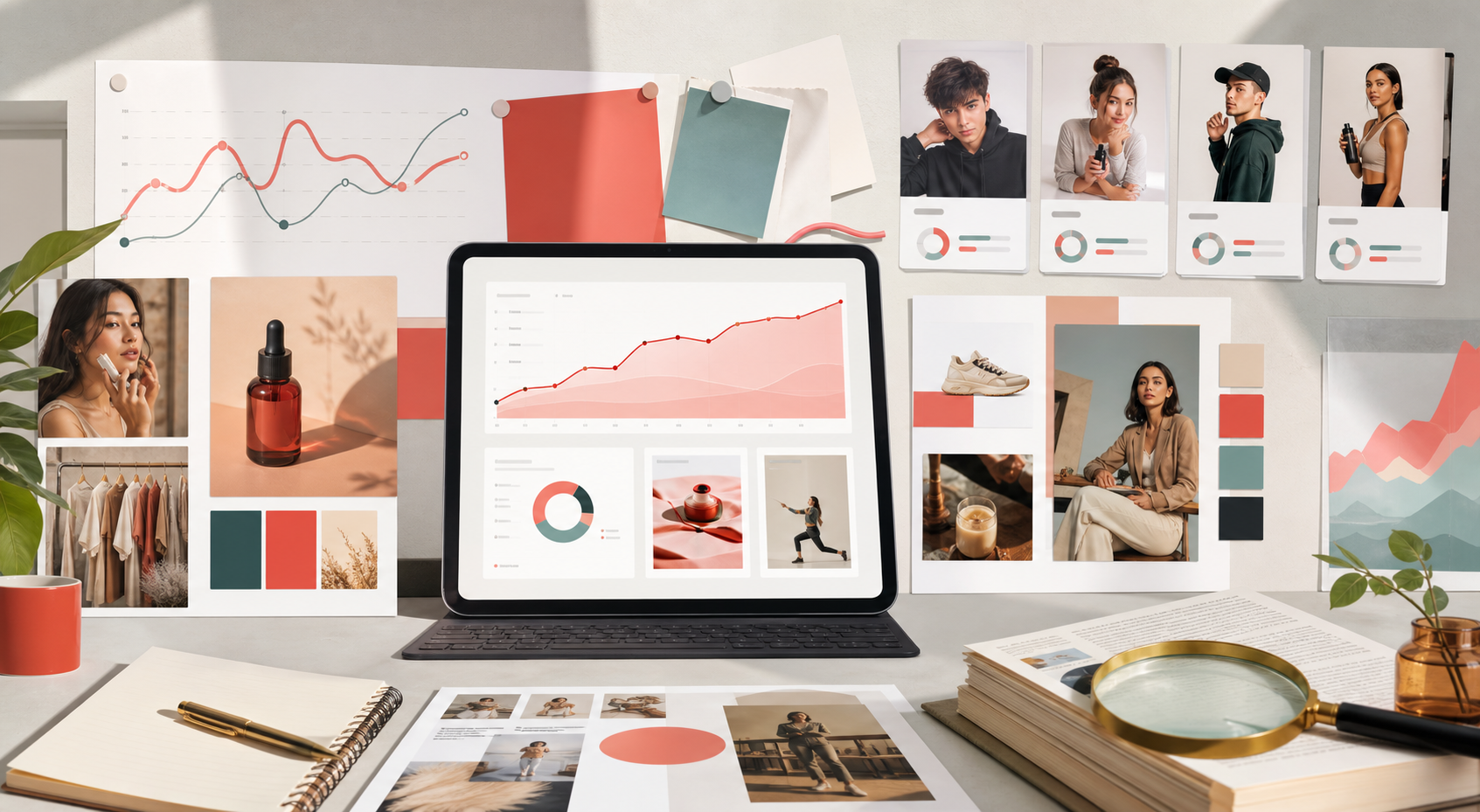
A lot of teams do not search for “TikTok Research API” because they want to do research.
They search it because someone inside the company has already asked a harder question:
“What is taking off on TikTok right now, and can we measure it before everyone else reacts?”
That sounds simple until you try to build it.
You look at TikTok’s official developer products, find the Research API, and think you are close. Then you discover the real problem: the API that sounds most relevant is not really designed for ordinary commercial trend-scanning workflows.
If your project is mainly about pulling account and video data, start with How to Fetch TikTok User Data & Video Metrics via API 2026. This article is narrower. It is for teams trying to answer one specific question:
Can TikTok Research API support commercial use trend scanning, or do you need a different route?
The Short Answer
Usually, no.
For most brands, agencies, ecommerce operators, and SaaS teams, TikTok Research API is not the right production path for commercial trend scanning.
TikTok’s own Research Tools eligibility rules are built around independent, non-commercial research. TikTok’s official FAQ explicitly says creators, advertisers, and commercial users are not eligible for access to the Research Tools. TikTok’s Research Tools terms also prohibit commercial use beyond the scope of approved research. Sources:
That is the policy answer.
The operational answer is even more important: even if a team could access research tooling through an eligible institution, that still does not automatically give a normal business the kind of fast, repeatable, production-safe trend scanning it usually wants.
Why Commercial Teams Search This in the First Place
When a commercial team says “trend scanning,” it usually means one of four things.
1. Product teams want early market signals
They want to spot:
rising product categories
new use cases
repetitive creator talking points
before-and-after formats that are spreading fast
This is common in TikTok Shop, beauty, wellness, gadgets, apparel, and impulse-buy categories.
2. Content teams want format signals
They are not just looking for popular videos.
They want to know:
what opening style is spreading
what narrative structure is getting copied
what angle creators keep repeating
which content buckets are saturating
3. Commerce teams want buying-intent signals
This is where “trend” gets more serious.
A lot of TikTok content is entertaining but commercially useless. Teams want to find signals that connect to demand:
repeated product mentions
conversion-oriented demos
comment patterns that suggest buyer intent
creator clusters around a category
4. Agencies want category snapshots at scale
Agencies rarely need one viral example. They need repeatable scanning across many categories, clients, and time windows.
That means they care about workflow stability as much as raw access.
Why TikTok Research API Usually Fails the Commercial Use Case
This is where the misunderstanding begins.
The words “Research API” sound promising if your goal is scanning trends. But the commercial use mismatch shows up in three places.
Eligibility Is the First Wall
TikTok’s current official Research API eligibility rules focus on approved academic or nonprofit-style research in specific regions. TikTok’s own FAQ states that creators, advertisers, and commercial users are not eligible for Research Tools access.
That alone is enough to disqualify the ordinary brand or SaaS workflow.
So if your company is asking:
can we build an internal trend scanner for our marketing team?
can we sell trend intelligence to clients?
can we feed this into a commercial dashboard?
The official research route is already a bad fit.
Even the Data Behavior Is Not Built for Fast Commercial Monitoring
TikTok’s official FAQ also notes two operational details that matter a lot:
new videos can take up to
48 hoursto appear in the search indexsome statistics, including view count and follower count, can take up to
10 daysto update in archived datasets
That is a huge clue.
A commerce or content operations team often wants:
same-day signals
fast-moving topic shifts
early breakout patterns
timely competitive snapshots
A dataset that updates on research time rather than decision time may still be valuable for analysis, but it is much less useful for active commercial scanning.
The Quota Model Reflects Research, Not Production Operations
TikTok’s official FAQ currently describes:
1,000 requests/dayfor most research API usageup to
100,000 records/dayacross the APIsseparate limits for followers/following list access in eligible research contexts
That may be enough for a defined research project. It is not automatically enough for a multi-client, multi-category, always-on commercial pipeline.
The point is not that the quota is “bad.”
The point is that the workflow it supports is fundamentally different.
What Commercial Trend Scanning Actually Needs
This is the part many articles skip.
A business does not need “TikTok data” in the abstract. It needs a repeatable answer to a specific commercial question.
For most teams, trend scanning means combining five layers.
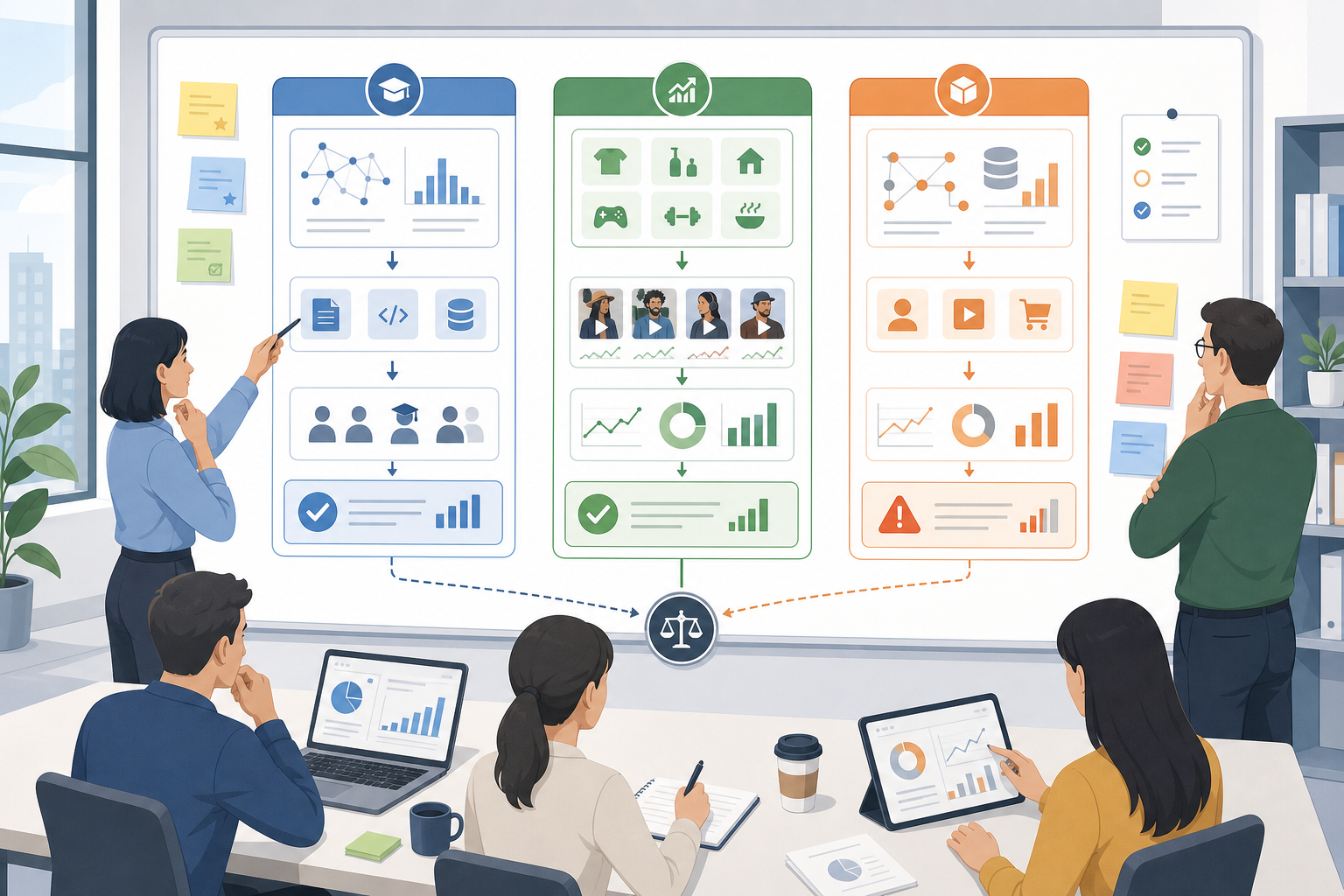
Layer 1: Topic Movement
You want to know whether a phrase, category, or use case is gaining momentum.
Examples:
collagen coffee
portable blender
acne patch routine
kitchen restock
creator setup desk
The question is not “Did one video go viral?”
The question is “Is this topic repeating across enough creators, formats, and comment threads to matter?”
Layer 2: Creative Pattern Recognition
This is where commercial trend scanning becomes useful.
You need to identify:
which hooks are repeating
which demo styles convert attention into comments
which video structures people are copying
whether the format is educational, problem-solution, reaction-led, or urgency-led
Without this layer, teams confuse “popular content” with “transferable content.”
Layer 3: Commerce Intent Signals
This is the difference between trend watching and trend action.
You want to measure:
product mentions
repeated brand mentions
creator clustering by product theme
save/share behavior around product demos
comment language such as “where do I get this,” “I need this,” “does it work,” or “link?”
That is the part many trend dashboards never really solve.
Layer 4: Time-Based Change
A trend scanner is not a static list.
It should show:
what is new this week
what accelerated in the last 7 days
what stayed strong for 30 days
what spiked and died
If your trend view has no time dimension, it is just a feed.
Layer 5: Category-Level Comparison
Commercial teams do not just ask “What is trending?”
They ask:
What is trending in my category?
What is rising in adjacent categories?
Which creator groups are early?
Is this broad momentum or a small niche loop?
That is why a usable trend scanner looks more like an operational research tool than a viral-video gallery.
A More Useful Decision Framework
Here is the cleaner way to decide what path to take.
Need | Best route | Why |
|---|---|---|
Academic or nonprofit public-interest research | Official TikTok Research API | That is what the product is designed for |
Authenticated user/profile/video data for an allowed integration | Official TikTok developer APIs | Good for account-linked workflows |
Commercial trend scanning across categories, products, and creators | Production-oriented third-party data workflow | Better fit for monitoring, comparison, and repeated business use |
That is the real split.
The mistake is assuming the “research” label means “best for market intelligence.”
In practice, it often means “best for approved research under restricted use conditions.”
What a Commercial Trend-Scanning Workflow Should Look Like Instead
A stronger commercial workflow usually starts with the business question and then chooses the data path.
If the team is tracking creator and video behavior
Start with profile, video, and engagement collection.
This is where a technical companion like How to Fetch TikTok User Data & Video Metrics via API 2026 becomes useful, because trend scanning often begins with reliable raw entity collection.
If the team is tracking product or shop momentum
Use a product-oriented trend layer rather than a generic video-only one.
For KeyAPI’s existing product-side route, this is the more natural internal landing page:
That page belongs in the workflow because “commercial trend scanning” often means:
what products are appearing more often
which creators are pushing them
how category momentum shifts over time
If the team is trying to compare topics across commercial use cases
Then the job is no longer “get one endpoint working.”
The job becomes:
normalize signals
monitor over time
detect repeatable patterns
connect trend signals to business action
That is why teams often end up needing a broader operational layer instead of a narrow official API route.
Three Mistakes Teams Make With TikTok Trend Scanning
Mistake 1: Confusing visibility with intent
A trend with massive views is not always a commercial trend.
Some topics spread because they are funny, polarizing, or weird. That does not mean they map to product demand.
Commercial teams should always ask:
is this attention
or is this demand-adjacent attention
Mistake 2: Measuring only top posts
Top-post analysis is seductive and often misleading.
If you only look at the biggest winners, you miss:
early repeats
mid-tier creator adoption
comment pattern drift
category spread before the spike
By the time a trend is obvious on the biggest posts, many teams are already late.
Mistake 3: Treating trend scanning like manual browsing
Manual browsing is useful for taste.
It is terrible for consistency.
The moment a team needs to compare:
this week versus last week
one category versus another
one creator cluster versus another
manual scanning starts collapsing under its own memory problem.
When TikTok Research API Still Makes Sense
There are cases where the official research route is still the correct choice.
It makes sense when:
the project is genuinely academic or nonprofit
the scope is bounded and research-led
the research question is more important than immediate commercial action
archived public data is acceptable for the task
access requirements and quotas fit the project design
That is a legitimate use case.
It is just not the normal use case behind the keyword you are targeting here.
So What Should a Commercial Team Do?
If the goal is trend scanning for a brand, agency, SaaS tool, or ecommerce operator, the better question is not:
“Can we force TikTok Research API into this workflow?”
The better question is:
“What data route gives us a repeatable, legally safer, commercially usable trend-scanning system?”
That usually leads to one of two outcomes:
a focused internal workflow for account/video/category monitoring
a broader data layer built for commercial operations rather than research access
For teams already operating in TikTok Shop, creator intelligence, or product discovery, that second route is usually more realistic.
Final Answer
TikTok Research API is important, but for most commercial teams it is the wrong tool for the everyday job implied by this keyword.
If your business needs:
fast trend scanning
repeated category monitoring
creator and product signal tracking
commercially usable workflows
then the decision is usually not “Research API or nothing.”
It is “Research API for approved research, and a different production data workflow for commercial operations.”
That distinction saves a lot of wasted implementation time.
FAQ
Can a commercial business use TikTok Research API?
Usually no. TikTok’s official documentation says commercial users such as creators, advertisers, and commercial operators are not eligible for Research Tools access.
Is TikTok Research API good for real-time trend scanning?
Not really. TikTok’s official FAQ notes that new videos can take up to 48 hours to enter the search index, and some statistics can take up to 10 days to update in archived datasets.
What does a commercial trend scanner need that a research dataset often does not provide well?
It usually needs faster refresh cycles, category comparison, creator clustering, product-intent signals, and repeatable operational monitoring.
Is this the same as a TikTok Shop trend dashboard?
Not exactly. A TikTok Shop trend dashboard is usually narrower and more commerce-focused. Commercial trend scanning is broader and may include creator signals, topic movement, format shifts, and product acceleration.
Where should I go next inside the KeyAPI site?
If your next question is about raw TikTok profile and video data, go to How to Fetch TikTok User Data & Video Metrics via API 2026. If your next question is product-side trend monitoring, go to TikTok Shop Product Trends Analytics. If you want the broader platform context, start from KeyAPI.